


If you have ever heard someone say “blockchain will change healthcare” and felt completely lost right after, you are not alone. Most explanations sound like a mix of computer science and science fiction. This one will not.
Let’s strip it down to basics and talk like humans.
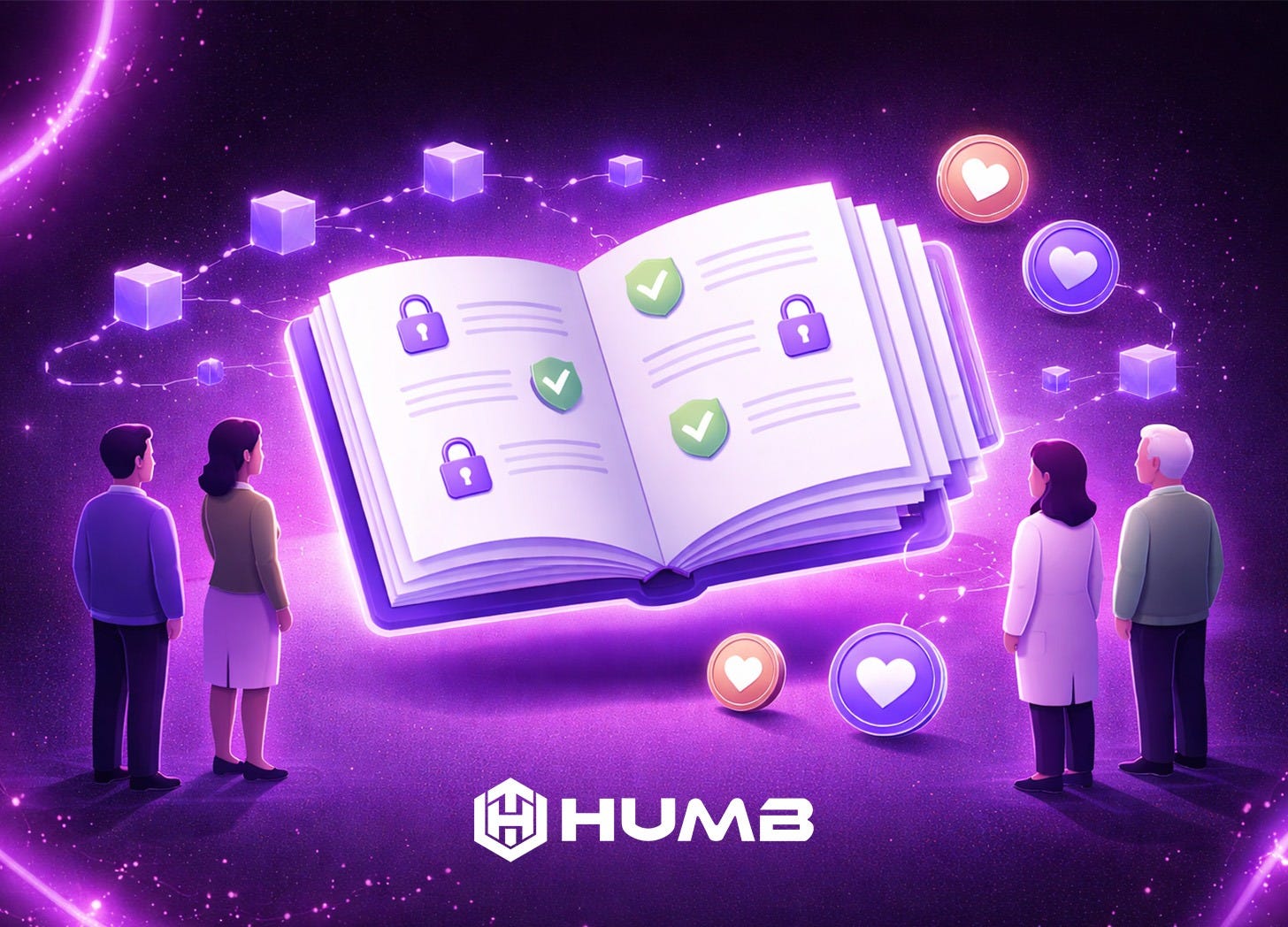
First things first. What is blockchain in simple terms?
Think of blockchain as a shared digital notebook.
Every time something happens, a new page is added. Once written, nobody can erase or secretly change it. Everyone who is allowed to see it sees the same thing.
That is it.
No wires. No coding. No mystery.
This is why people trust blockchain technology. Not because it is fancy, but because it is transparent and tamper-resistant.
Now, where does healthcare come into this?
Healthcare runs on data.
Patient records
Test results
Prescriptions
Insurance claims
Clinical trials
Right now, this data is scattered across hospitals, labs, insurance companies, and software systems that do not talk to each other properly. That causes delays, mistakes, data leaks, and fraud.
Blockchain in healthcare solves one core problem - TRUST.
How blockchain improves healthcare data security
Imagine your medical record as a file that only you control.
Instead of copies floating around on different servers, blockchain allows healthcare data to be securely recorded and verified without being altered.
Doctors can access accurate records.
Hospitals can avoid duplicate tests.
Patients stay in control of who sees what.
This is why people talk about blockchain healthcare data security so much. It is not hype. It is a practical fix to a broken system.
What about patient privacy? This is the big fear.
Good question. And no, your medical history is not floating around for everyone to see.
In blockchain healthcare systems, sensitive data is not openly visible. What gets stored is proof that the data exists and has not been changed. Access is controlled. Permission-based. Trackable.
So when people ask, “Is blockchain safe for healthcare data?” the honest answer is this.
It is often safer than what exists today.
Where do crypto and tokens fit in?
This is where most beginners get confused.
Blockchain does not always mean trading or speculation.
In healthcare, tokens can be used to
Reward patients for sharing data for research
Incentivise healthy behaviour
Power secure healthcare platforms
Enable faster and transparent payments
This is called healthcare tokenisation.
Not hype coins. Utility-based systems.
That is why you will hear terms like healthcare crypto platforms or healthcare - focused blockchain projects. They are infrastructure, not memes.
Real-world blockchain healthcare use cases
Let’s make this concrete.
Hospitals using blockchain to prevent medical record tampering
Research organisations verifying clinical trial data
Insurance claims processed faster with fewer disputes
Patients earn rewards for participating in medical studies
These are not future dreams. They are happening now.
This is why blockchain healthcare use cases are one of the most searched topics in this space.
Do you need to understand tech to benefit from this?
NO
Just like you do not need to understand how the internet works to use a smartphone.
If you are a patient, blockchain gives you more control.
If you are a doctor, it reduces admin chaos.
If you are an investor, it opens a new sector of healthcare innovation.
SIMPLE.
Why beginners should care about blockchain healthcare
Because healthcare is personal.
Everyone becomes a patient at some point. Everyone depends on medical data being accurate and secure.
Blockchain in healthcare is not about replacing doctors or hospitals. It is about fixing the invisible systems behind them.
If you understand that, you are already ahead of most people.
Final thoughts
Blockchain healthcare is not about wires, jargon, or buzzwords. It is about trust, transparency, and control.
For beginners, the best way to approach it is not to fear complexity but to ignore it. Focus on the problem it solves, not the technology itself.
The rest will make sense over time.
Disclaimer: The views and opinions expressed in this article are those of the author and are intended for informational and educational purposes only. They do not necessarily reflect the official position, strategy, or views of the company, its affiliates, or partners. This content should not be construed as financial, investment, legal or medical advice. Readers are encouraged to conduct their own research and seek independent professional guidance where appropriate.