


A few years ago, Piyush received a letter from his hospital.
Your data may have been compromised.
No explanation. No compensation. No accountability.
Just a polite apology and a free year of credit monitoring.
What Piyush did not know and what most patients still do not realise is this:
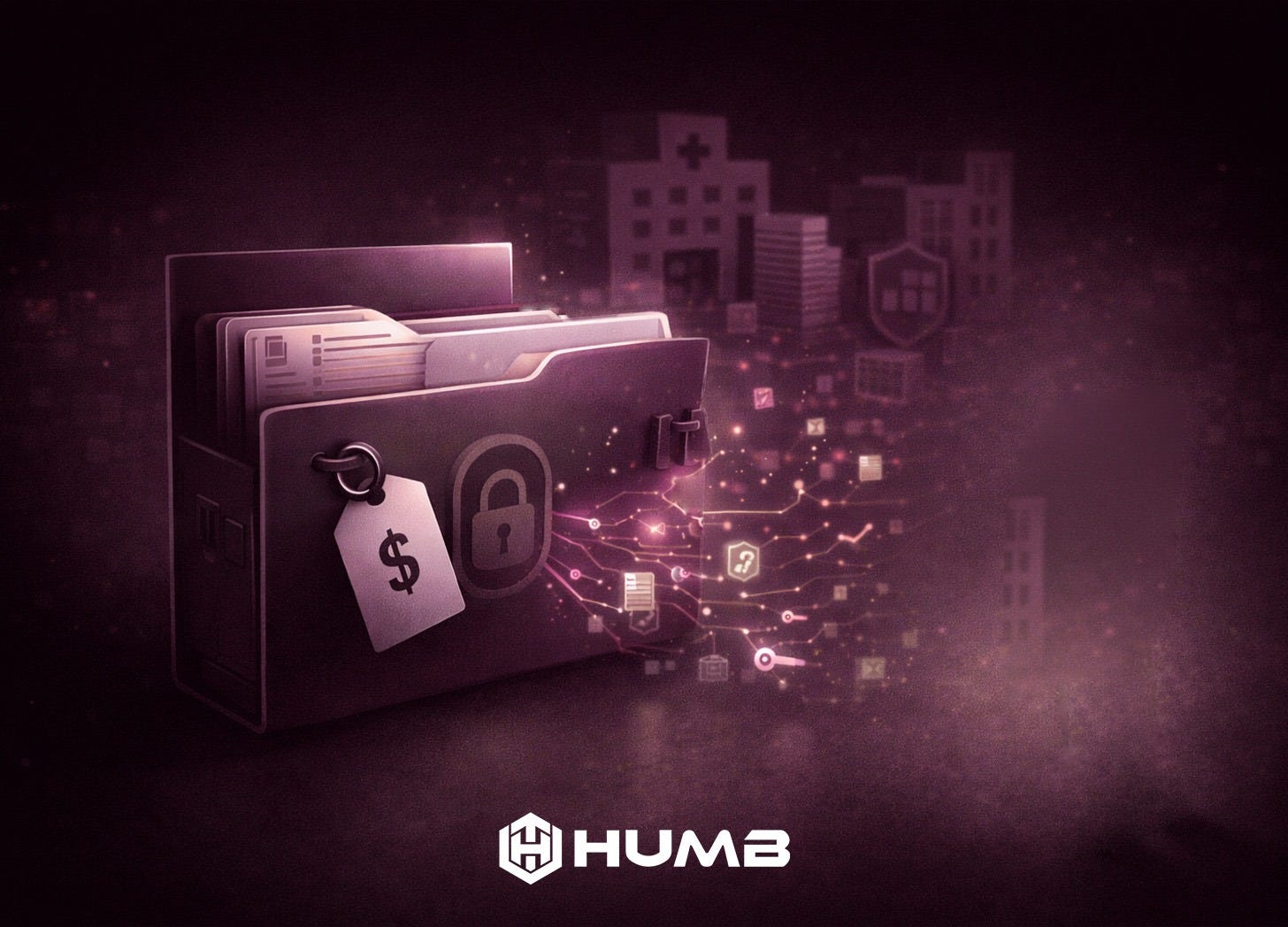
His medical data was never just stored.
It was an asset.
And it is worth far more than anyone ever told him.
The Invisible Market You Are Already Participating In
Healthcare data is not paperwork.
It is one of the most valuable digital commodities in the world.
A complete medical record can sell for between 250 and 1,000 dollars on the dark web, according to cybersecurity research.
Healthcare data breaches affected over 133 million individuals in 2023 alone, based on the United States Department of Health and Human Services reporting.
The global healthcare data analytics market is projected to exceed 70 billion dollars by 2030.
The healthcare artificial intelligence market is expected to surpass 180 billion dollars this decade.
Every one of those markets runs on patient data.
Your prescriptions.
Your lab reports.
Your imaging scans.
Your genetic markers.
Your wearable device data.
You generate it.
Hospitals store it.
Pharmaceutical companies analyse it.
Artificial intelligence models train on it.
You get nothing.
Why Medical Data Is More Valuable Than Credit Card Data
When a credit card is stolen, it can be cancelled.
When medical data is stolen, it cannot.
Medical records contain identity details, insurance information, diagnostic history, prescription records, family history, and often biometric identifiers.
That permanence makes it extremely valuable.
Unlike financial data, health data does not expire.
It compounds.
And that compounding nature makes it useful for drug research, insurance risk modelling, artificial intelligence diagnostics, population health analytics, and clinical trial optimisation.
The irony is simple.
The person at the centre of that data economy is treated like a bystander.
But My Data Is Anonymous
Is it?
Research has shown that anonymised health datasets can often be re-identified when combined with other public or commercial datasets.
Even when data remains anonymised, it is still monetised.
Hospitals license de-identified datasets.
Data brokers aggregate health behaviour.
Pharmaceutical companies purchase structured datasets for modelling.
This may be legal in many jurisdictions.
But legality does not equal fairness.
Let Us Do the Math
Imagine your health data contributes to:
One research dataset used by a pharmaceutical company.
One artificial intelligence training dataset.
One insurance risk model.
One public health analytics platform.
Each of those uses may generate revenue.
Individually, your contribution seems small.
Collectively, at scale, it becomes a multibillion-dollar industry.
If your data contributed even a fraction of that value, say 1,000 dollars per year in aggregate economic output, that would not be unrealistic given current market valuations.
Yet the compensation model is zero.
Not reduced insurance premiums.
Not token based rewards.
Not revenue sharing.
ZERO.
The Real Issue Is Not Privacy. It Is Ownership.
For years, the debate has centred on privacy.
But privacy is defensive.
Ownership is structural.
Right now:
You can view some of your medical records.
You can sometimes download them.
You rarely control who can access or monetise them programmatically.
You cannot track how often they are used.
You cannot price access.
You cannot revoke access retroactively in most systems.
Access is not ownership.
Ownership means permission based control, transparent audit trails, programmable consent, and economic participation.
Traditional healthcare infrastructure was never built for that.
The Centralisation Problem
Most health data sits in centralised silos:
Hospital servers.
Insurance databases.
National health systems.
Private data warehouses.
Centralisation creates single points of failure, higher breach risk, opaque data sharing agreements, and no patient level monetisation rails.
It was built for storage.
Not for a digital data economy.
What Would a Fair System Look Like
Imagine a different model.
Instead of:
Hospital to Data Broker to Pharmaceutical Company to Artificial Intelligence
Patient excluded
You have:
Patient to Consent Layer to Data Usage to Smart Contract to Compensation
In this model:
Data access is permission based.
Usage is logged transparently.
Value exchange is programmable.
Patients can revoke or approve access.
Compensation flows clearly.
Blockchain infrastructure enables immutable audit logs, smart contract based permissions, tokenised incentive systems, and cross institution interoperability.
Not hype.
Architecture.
Why This Shift Is Inevitable
Three forces are converging.
First, demand for healthcare data from artificial intelligence systems is accelerating rapidly.
Second, data breaches are increasing, not decreasing, proving that centralised systems are fragile.
Third, patients are becoming digitally aware. People understand data value because technology platforms monetised it first.
Healthcare is simply late to this realisation.
It will not remain late forever.
The Ethical Question No One Is Asking Loudly Enough
If pharmaceutical breakthroughs are built on aggregated patient data,
If artificial intelligence tools are trained on millions of health histories,
If insurance models refine risk scoring using behavioural datasets,
Should the people generating that raw material participate in the upside?
Not as charity.
As stakeholders.
From Passive Subjects to Active Participants
The future of healthcare data is not secrecy.
It is structured transparency.
It is programmable consent.
It is sector specific infrastructure that treats data as an asset class, not a byproduct.
Healthcare focused blockchain ecosystems matter because healthcare requires compliance aware architecture, controlled token distribution, exchange infrastructure aligned with utility, and long term incentive design.
Without those rails, the idea collapses.
With them, patients become participants.
The Next Time You Visit a Hospital, Ask Yourself This
Your blood test results.
Your MRI scan.
Your wearable heart rate history.
If that data contributes to a billion dollar breakthrough someday,
Will you still be comfortable earning zero?
The healthcare data economy already exists.
The only question is this:
Will patients continue to be unpaid suppliers
Or will they become owners?

Disclaimer: The views and opinions expressed in this article are those of the author and are intended for informational and educational purposes only. They do not necessarily reflect the official position, strategy, or views of the company, its affiliates, or partners. This content should not be construed as financial, investment, legal, or medical advice. Readers are encouraged to conduct their own research and seek independent professional guidance where appropriate. For more information about HUMB and its initiatives, please visit humb.io